
Locally Grown x HairCycle
As part of Material Matters (2024)
London Design Festival
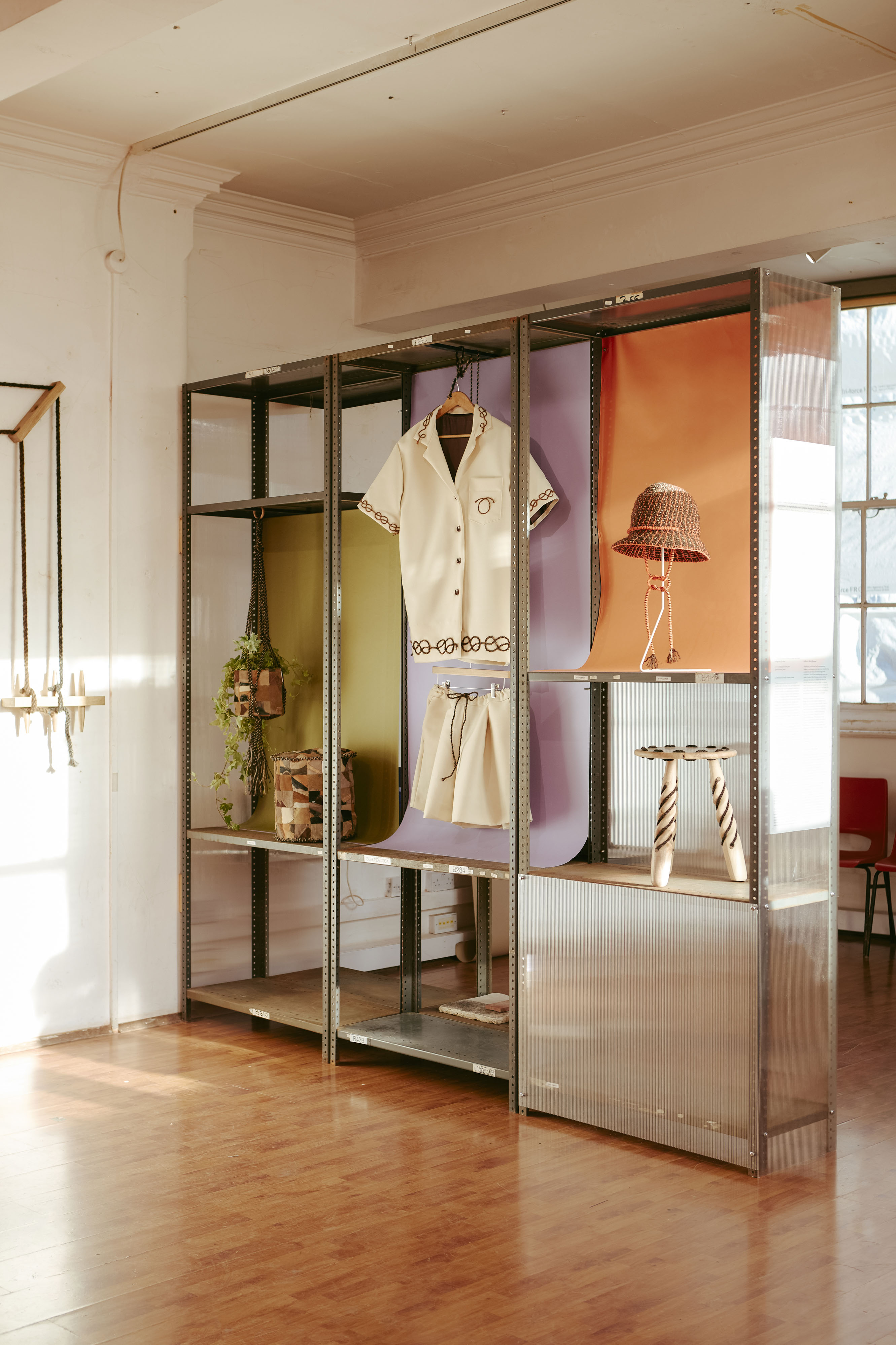
Locally Grown x HairCycle Collaborative Collection.
Photocredits: Rocio Chacon
Locally Grown is an interactive installation that invites visitors to explore their hair as a new material with great potential. This time, the touring showcase was located in the Oxo Tower as part of the Material Matters Fair during London Design Festival 2024.
LOCALLY GROWN at MATERIAL MATTERS
![]()
This exhibition is a continuation and evolution of their Locally Grown project, which launched at the Design Museum in 2022, showcase in Milan in 2023, and is being further developed in the studio’s new pilot recycling hub HairCycle in Stratford. Since February 2024, the HairCycle team has been collecting hair from local salons and barbershops in Newham to transform it into local, bio-based materials. Hundreds of kilograms of hair is wasted every month, choking drains, filling landfill sites, and releasing harmful greenhouse gases
The installation offered a chance to experience the full journey from fibre to product through live hair cuts, spinning, ropemaking demonstrations and an exhibition of design objects.
Collaboration and connection with others are key to their approach. As Sanne states in a recent Material Matters podcast interview, “I work independently, but I would never say I work alone.” Expanding on previous work and possible applications of this strong and versatile material, Studio Sanne Visser have invited nine other studios with a like-minded approach to regenerative and circular design, to collaborate on a series of unique objects that incorporates the studio’s hair yarn, cord and rope.
The exhibition was supported by the The Embassy of the Kingdom of the Netherlands and is co-curated by Company, Place, an organisation who specialise in a bio-regional approach to arts commissioning.

![]() Visitors experiencing a free haircut, and can experinece
Visitors experiencing a free haircut, and can experinece
Photocredits: Rocio Chacon
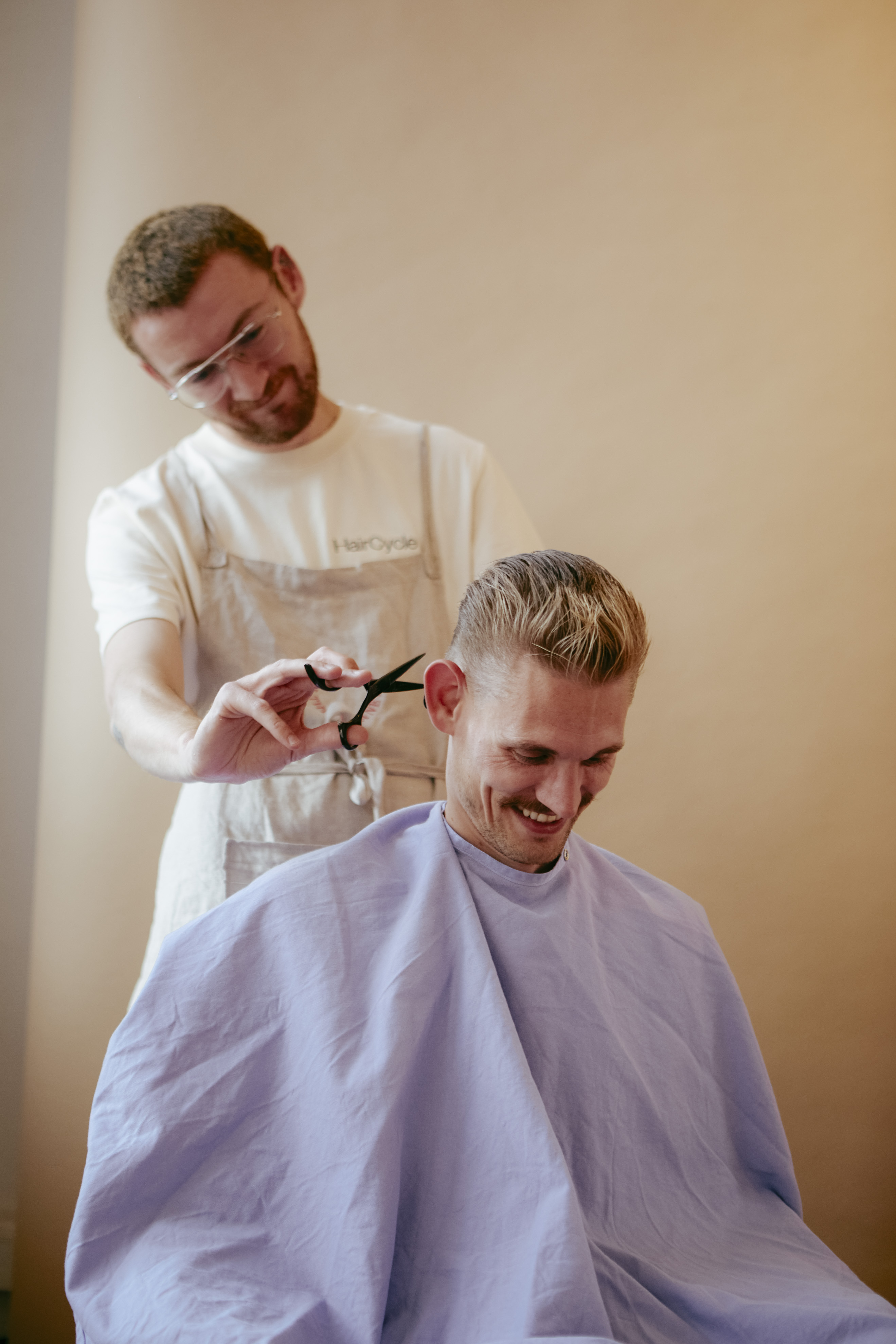 Visitors experiencing a free haircut, and can experinece


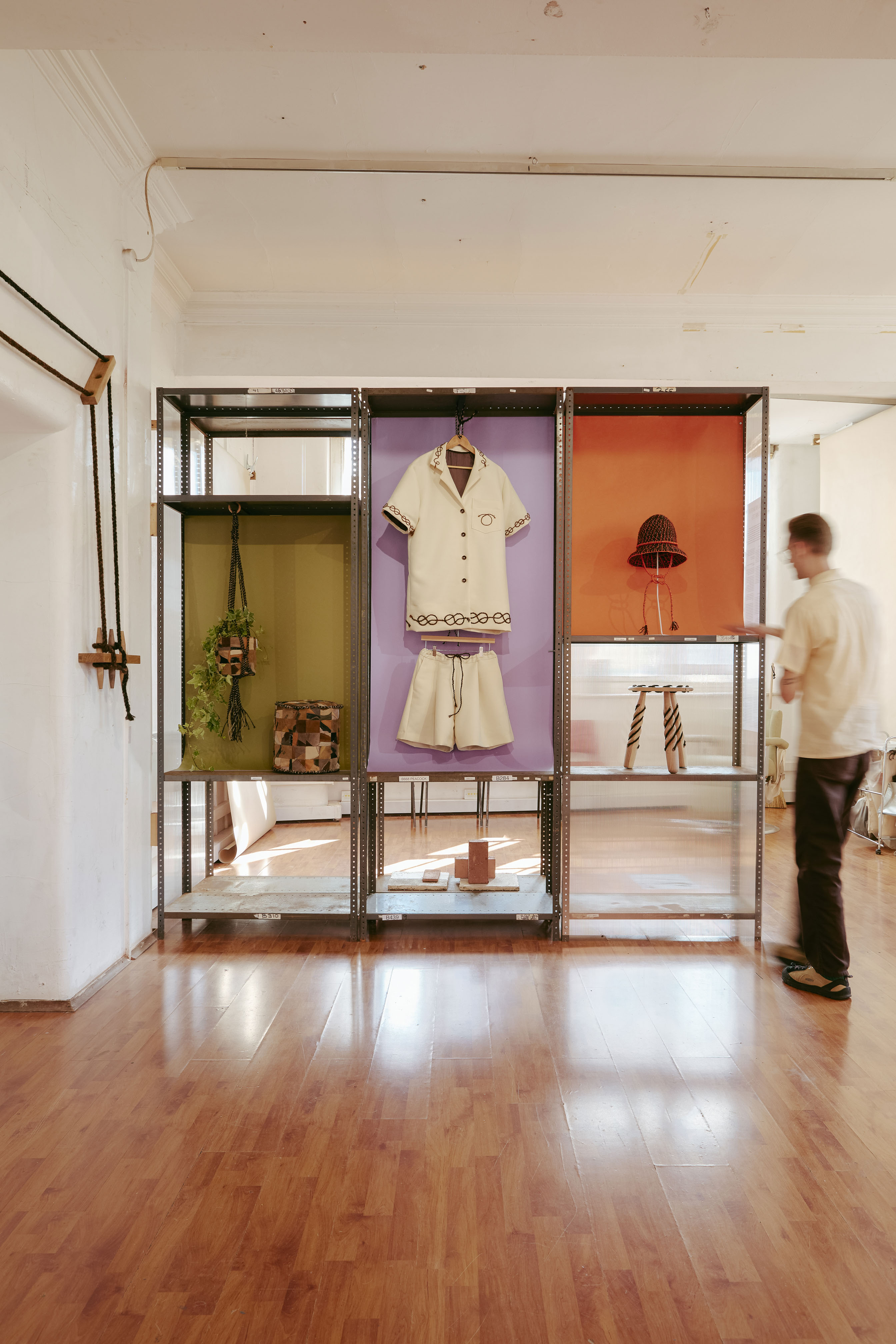

All photo credits: Rocio Chacon
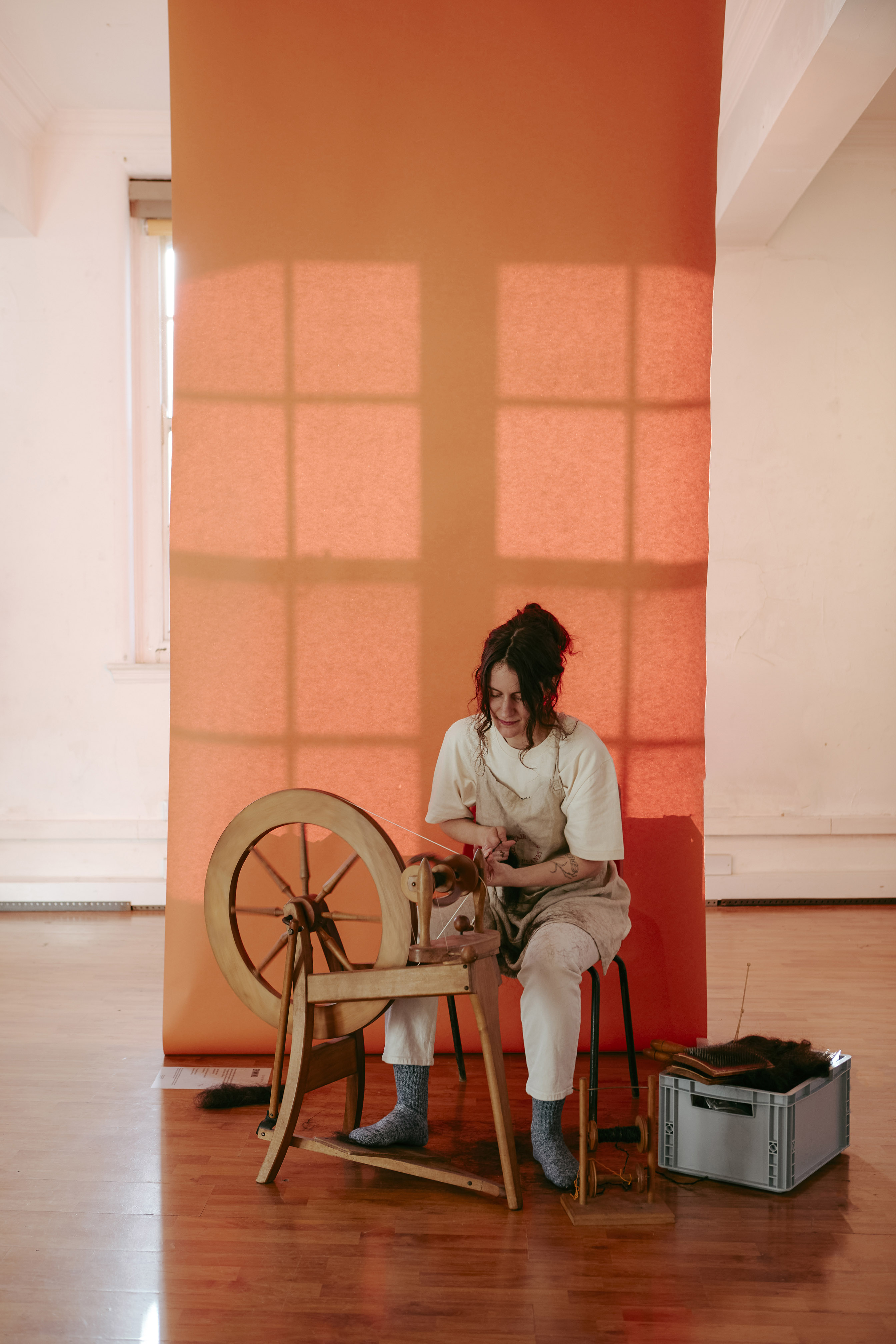
COLLABORATIVE OBJECTS
Helen Kirkum Studio, Lauren MacDonald, Mia Rodney, Rein Reitsma, Wilkinson & Rivera, have applied hair ropes into a broad range of products, from high-quality interior objects to unique accessories. R-Urban, Urban Radicals and Biocrafted x Coral Gardeners are using the materials in various research products, from fertilisers for local parks to restoring coral reefs.
Helen Kirkum Studio, Lauren MacDonald, Mia Rodney, Rein Reitsma, Wilkinson & Rivera, have applied hair ropes into a broad range of products, from high-quality interior objects to unique accessories. R-Urban, Urban Radicals and Biocrafted x Coral Gardeners are using the materials in various research products, from fertilisers for local parks to restoring coral reefs.

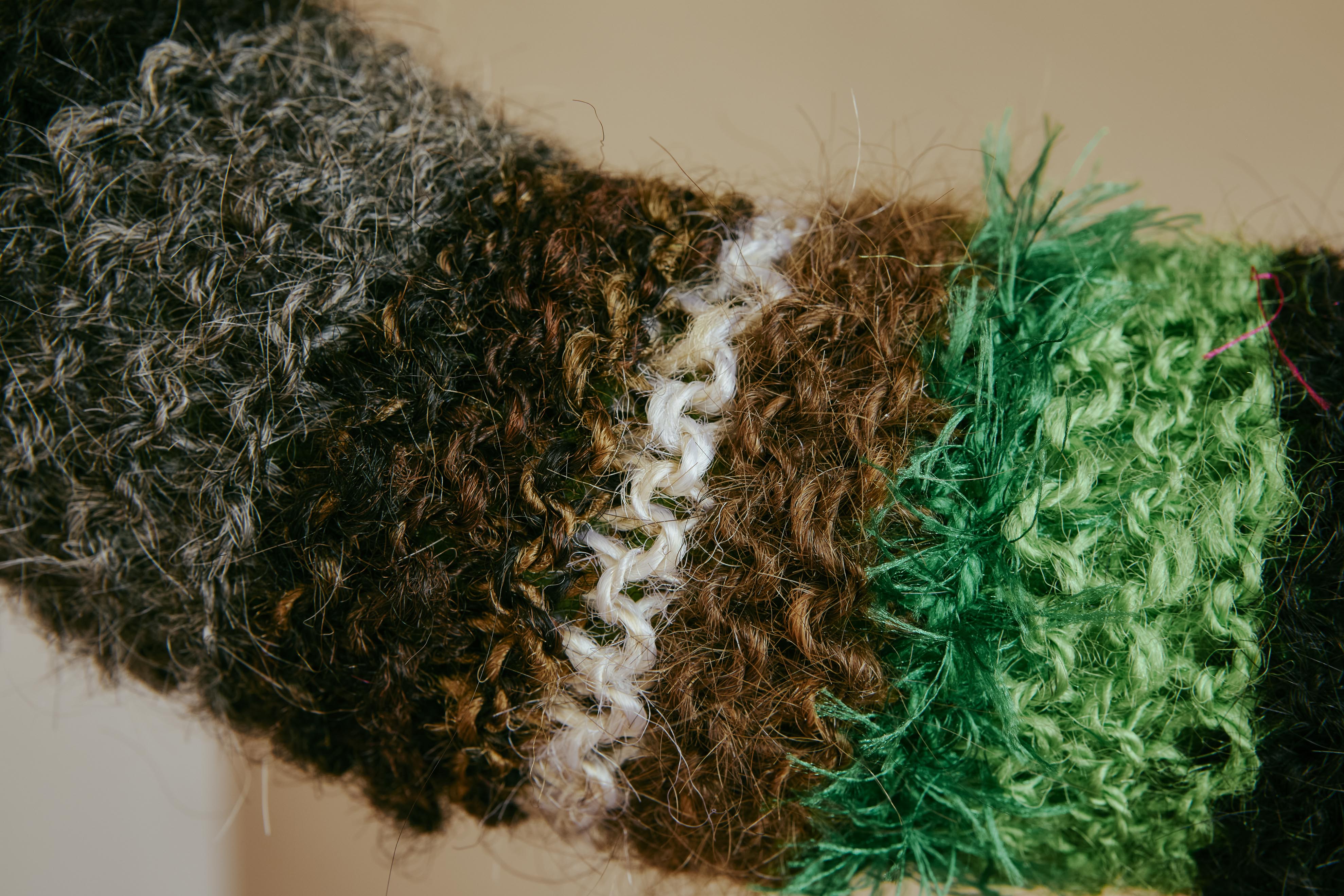
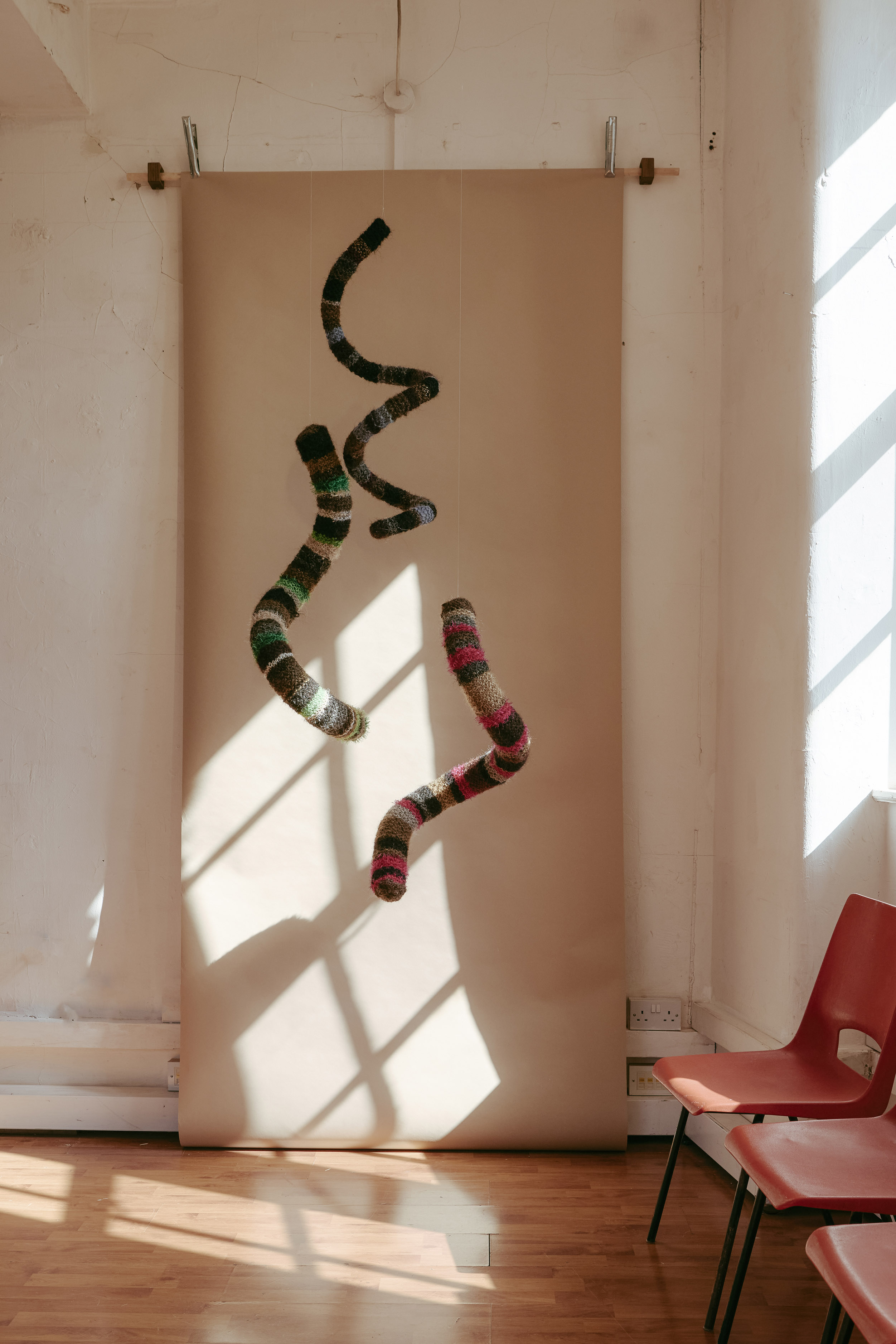
Textile Art by Mia Rodney (2024)
Channelling her experience of using synthetic hair in her braids, Mia Rodney has seized the opportunity to create an in-house version of the HairCycle process. Using knitting and crochet techniques to divert personal beauty waste from landfills into materials for her creative practice. Building on her previous work, the curly shapes represent her personal journey of self-acceptance and act as symbols of resilience and beauty.
Mia Rodney is a textile artist whose work explores identity and more specifically, relationships with hair through different knitted techniques. A historically underappreciated art form, it is only in the last few years that major institutions have given textile artists the platform they deserve. Much like those that have come before her, Rodney uses the medium to tell stories that are often layered, obscured and political, with underlying references and hidden meanings interwoven into the work that on a surface level is bright, colourful and convivial.
@allbitsknit

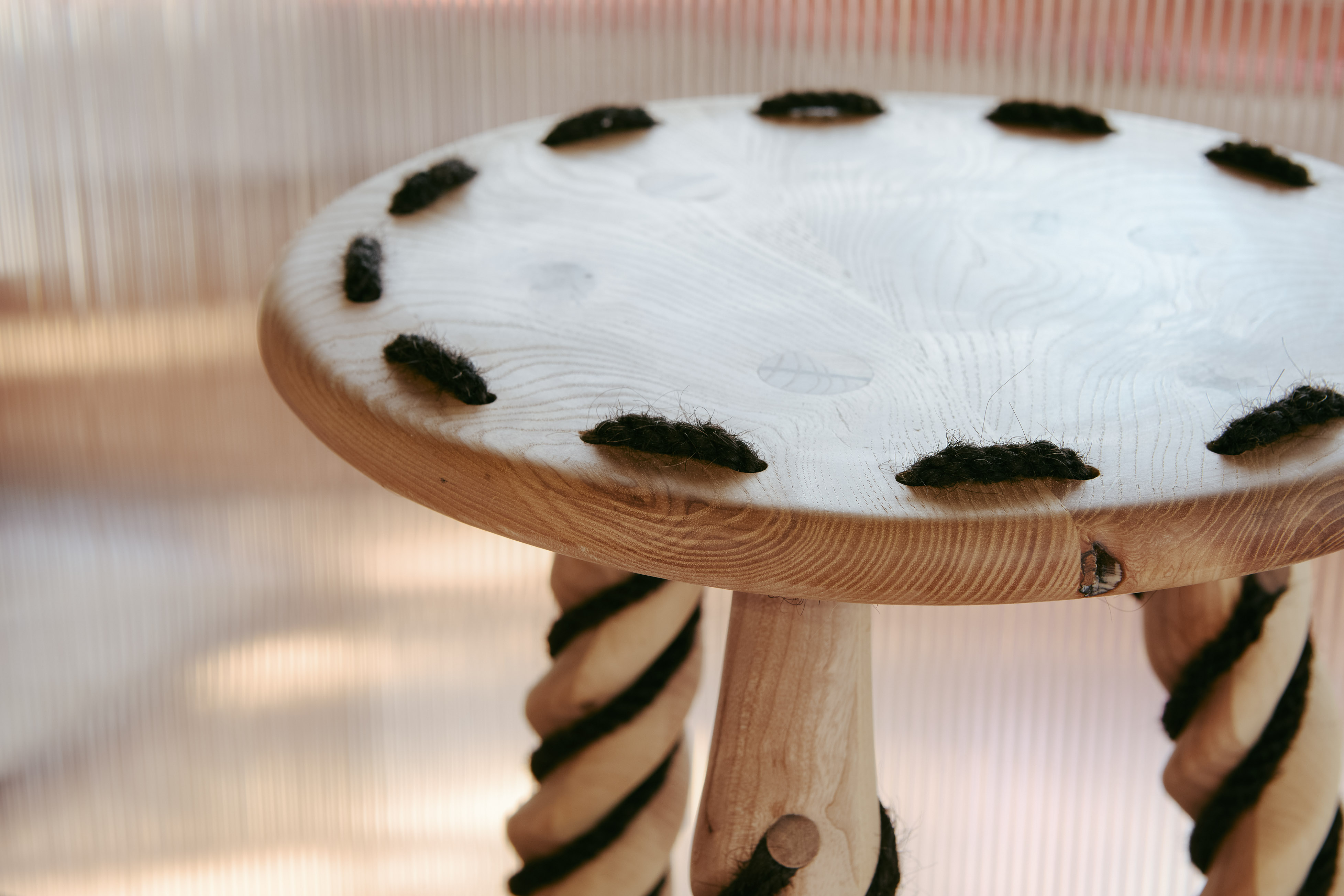
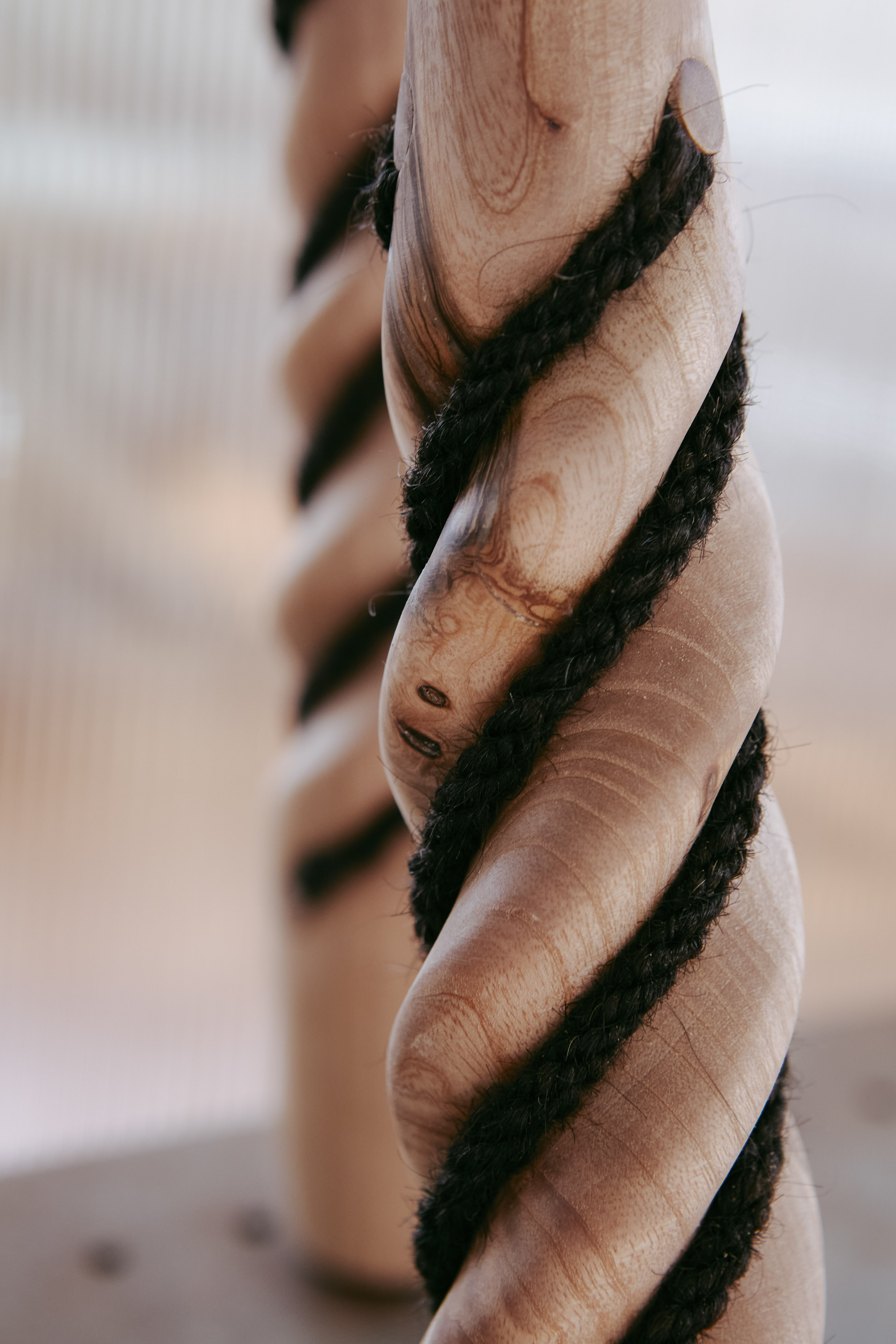
Seating by Wilkinson & Rivera (2024)
Captivated by the naturalness of the hair and its ability to retain the same qualities as when alive, Wilkinson & Rivera have applied the hair rope to furniture. The duo have inserted the soft and supple rope, in place of traditional seating materials such as rush, which becomes rigid after being harvested and dried. The design concept draws parallels between wood and hair; both grown, harvested, then hand-carved and spun respectively, recalling a sense of traditional manufacturing which is now far less common.
Wilkinson & Rivera is a design and manufacturing studio founded by Grant Wilkinson & Teresa Rivera. Guided by time-honoured techniques and materials, Wilkinson & Rivera create collectable pieces for the everyday. Each meticulously crafted object is manufactured in-house, by hand and with longevity in mind.
www.wilkinson-rivera.com
@wilkinson_rivera
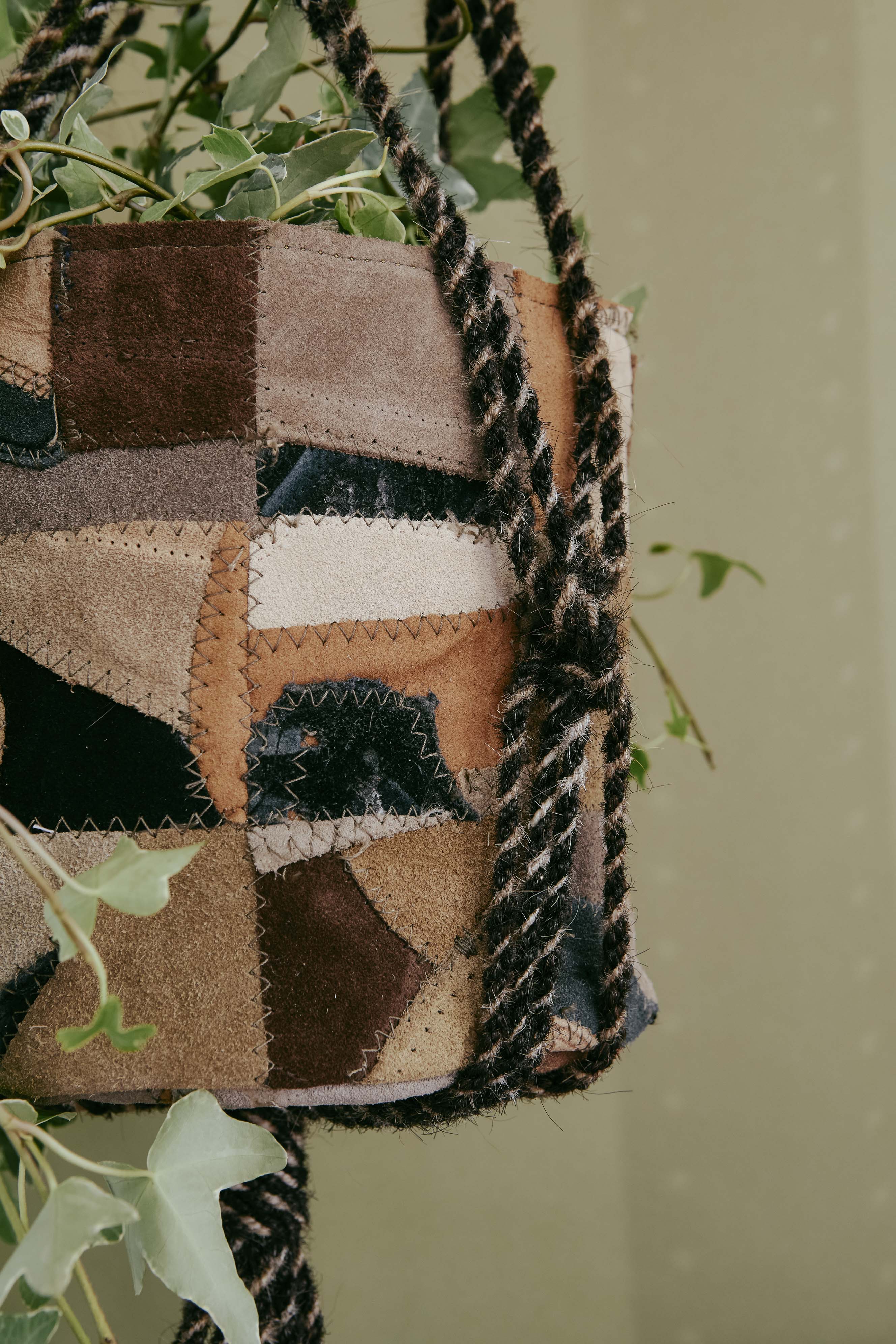


Homewares by Helen Kirkum Studio (2024)
Helen Kirkum Studio’s work highlights the importance of reframing the perception of materials considered ‘waste’ and instead positioning them as precious resources with great potential. Both Kirkum and Visser have set up systems that can process abandoned materials into new ones from end to end. Helen Kirkum Studio’s signature patchwork fabric is constructed by the dismantling and reassembling of post-consumer sneaker waste. Available in every colour and texture imaginable, natural tones in super soft suede were specifically chosen here to compliment the hair rope and create a tactile and durable set of interior objects.
Helen Kirkum Studio started in 2019 with a clear mission: to rescue old sneakers from landfills and transform them into new creations. The raw materials are sourced from single shoe bundles at Traid’s warehouse, then meticulously cleaned, deconstructed, and transformed into a distinctive, one-of-a-kind raw material ‘Collaged Sneaker Leather’. The output powerfully demonstrates the importance and intersection of craftsmanship, innovation, and ecological responsibility.
www.helenkirkum.com
@helenkirkumstudio

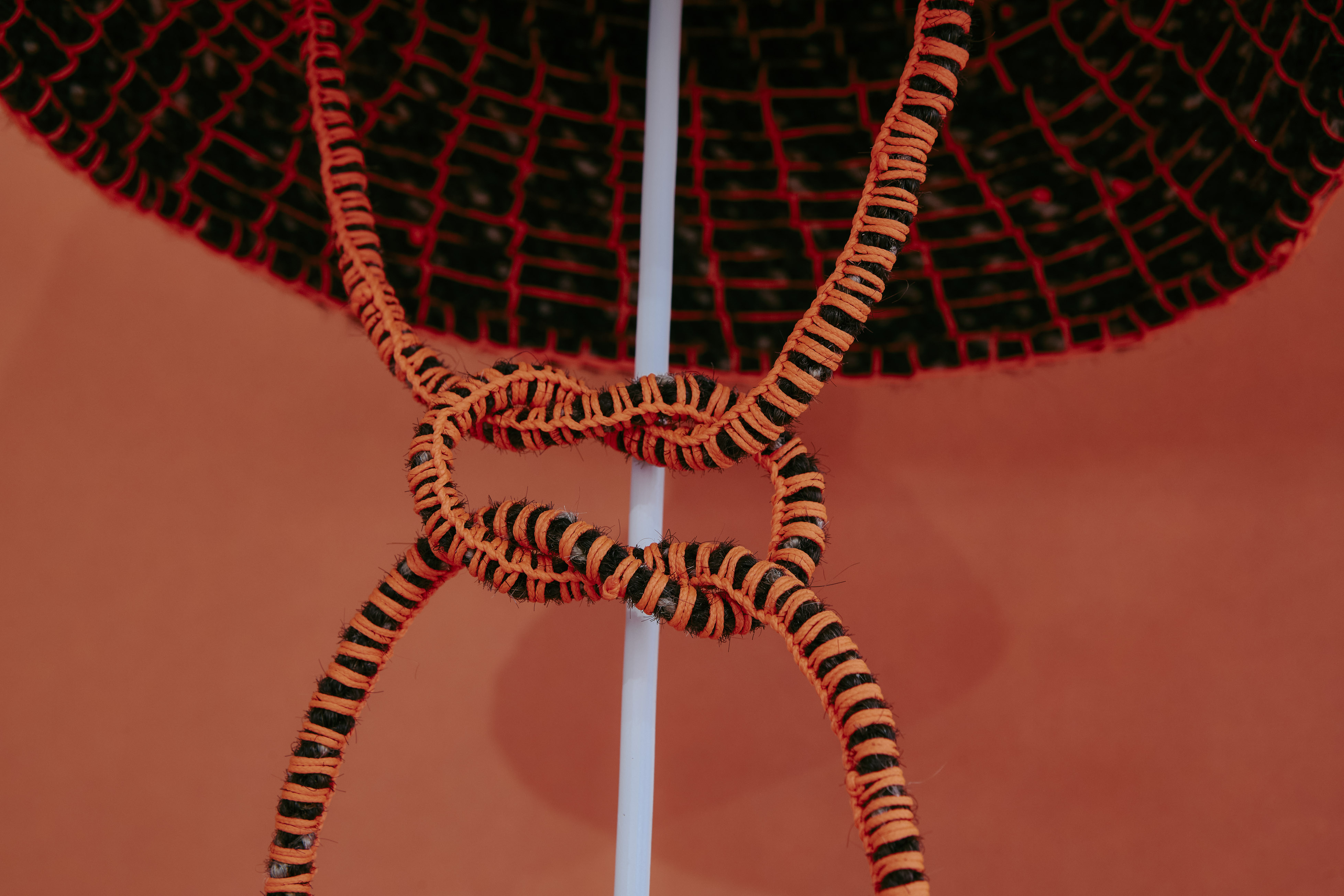

Hat by Rein Reitsma (2024)
Employing traditional and contemporary basketry techniques to the hair rope transforms a relatively 2D form into something more sculptural. Out of the countless ways you can make a basket, Rein Reitsma enjoys coiling with rope the most, it’s simple and effective and the outcome can be any shape or indeed scale. Here he cheerfully uses the technique to return the material to its source in the form of a hat, a product that could indeed be an exciting development for the follically challenged.
Working in between the fields of product design and art, Rein Reitsma patiently and playfully crafts unusual and colourful objects. His work sees everyday materials applied in unexpected places whether it be a dazzling quilt made of shirts, baskets of packaging straps, a hand-woven woven QR-code or a flying raincoat kite. This particular way of working made Rein an early and proud member of Basketclub, an ever-growing international community of designers and craftspeople that weaves a new “basket” every month.
www.reinreitsma.nl
@reinreitsma
@_basketclub_

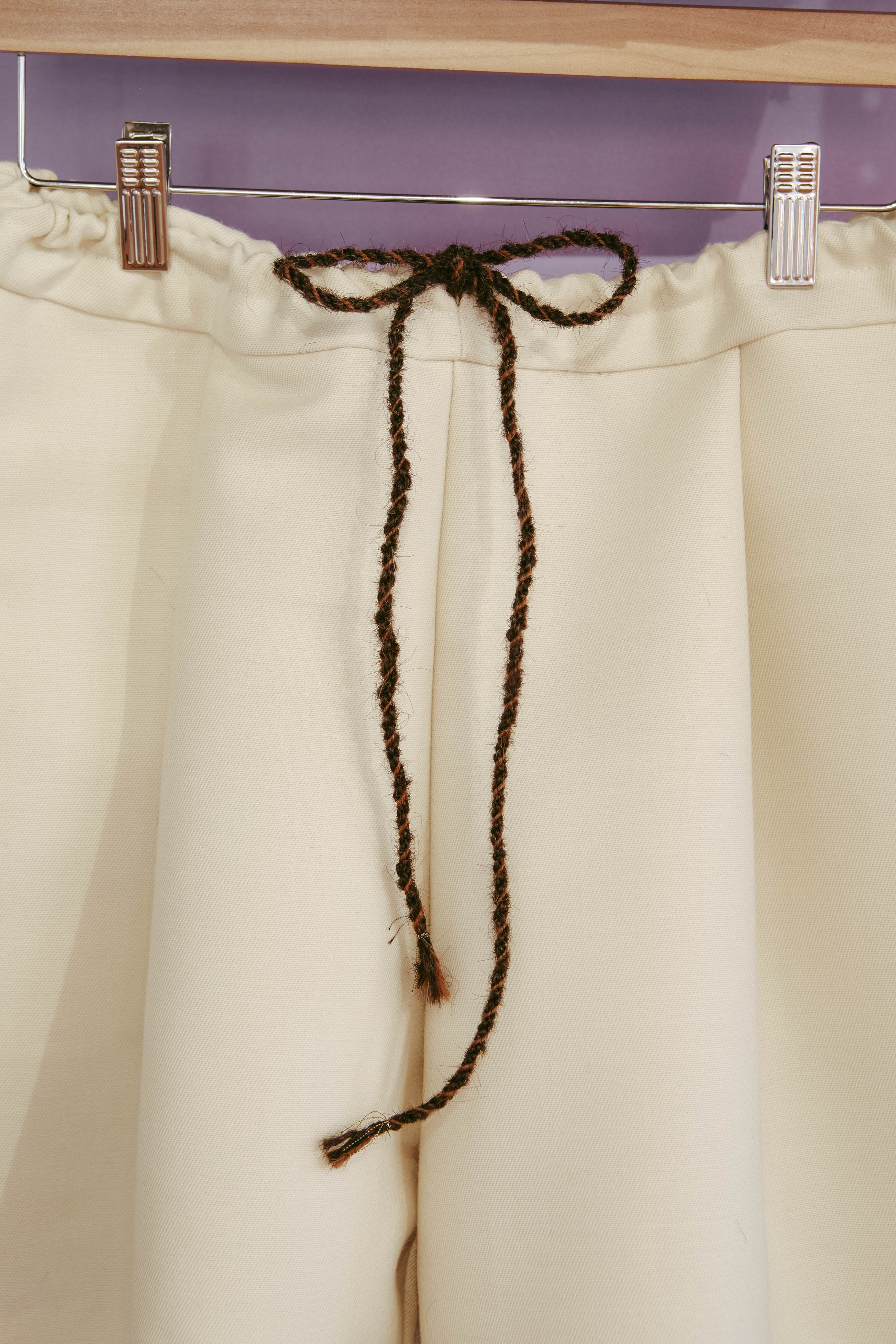

“A Suit To Remember Me By” by Lauren MacDonald (2024)
A Suit To Remember Me By looks at the shifting cultural attitudes towards hair as a textile material over time, and its potential as a tool for connection and memory-keeping.
The suit is made from deadstock wool, while the embroidery is Studio Sanne Visser’s hair rope, which MacDonald dyed with madder (an ancient red plant pigment) and stitched through with gold silk thread.
The material choices and swirling motifs pay homage to the ornate craft of Victorian hairwork, a process that turned the cut-off hair of a loved one into fine jewellery as a way to remember them and keep them close.
The work questions our understanding of hair once it’s left our bodies, and encourages viewers to see it as a sentimental and precious material with the potential to hold narratives within it.
Lauren MacDonald is a designer, maker, and founder of textiles studio Working Cloth. She is interested in the intersections between craft, technology, and labour, particularly around activities traditionally considered ‘women’s work’. Her first non-fiction book, In Pursuit of Color: From Fungi to fossil fuels, uncovers the origins of the world’s most famous dyes, brings together historic techniques, archive photography, specimens and present-day events to tell the histories of some of the world’s most important dyestuffs.
www.laurenmacdonald.co.uk
@working_cloth
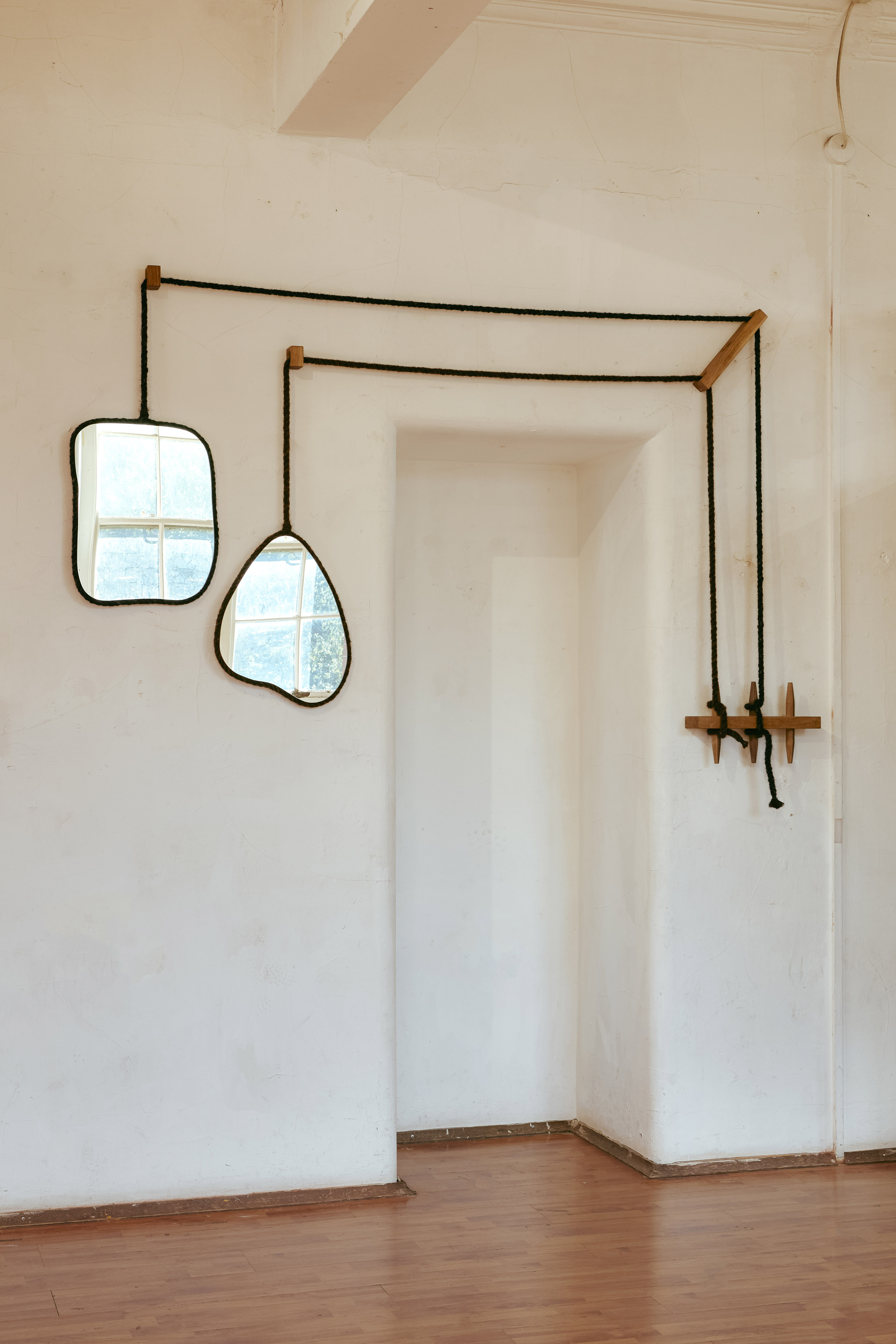
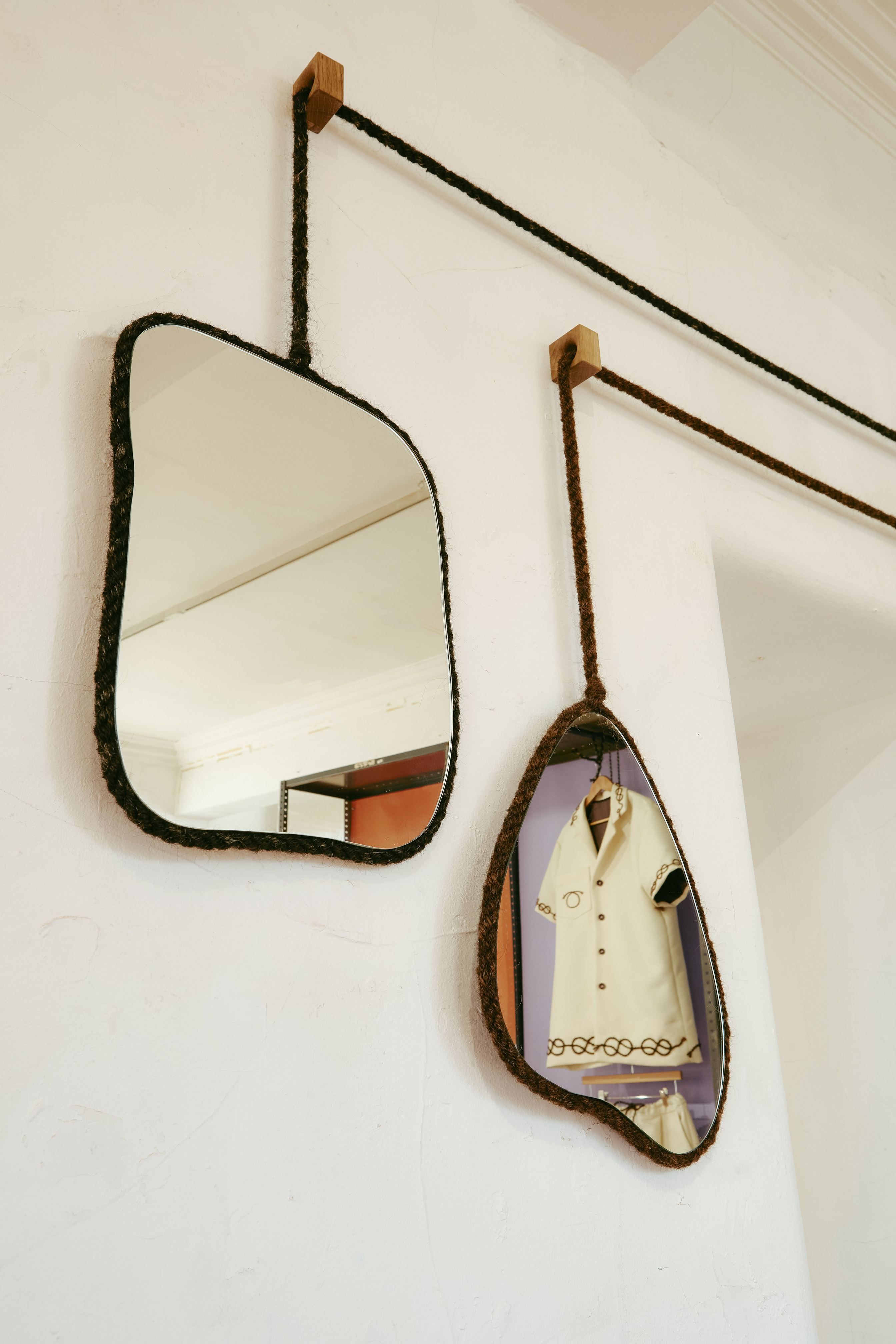
Mirrors by Studio Sanne Visser (2024)
Demonstrating the impressive strength-to-weight ratio of human hair, an average strand of human hair has the potential to hold up to 100g of weight, is an important and ongoing feature of Sanne Visser’s work. Superstitious or not, a hoisted-up mirror should remain in place, the combination of the hair rope holding the fragile mirror delivers the message and makes for a beautiful product which can be installed back into the hairdressers and barber shops from which some of those materials came. The handcrafted wooden elements are made to size by Jesse Beagley, a London based furniture maker.
Studio Sanne Visser, the driving force behind this project, is a material design research studio focused on exploring material innovation and future thinking through making and learning for circular worlds. Her work specialises in regenerative design, systems thinking, and sustainable solutions, with a unique emphasis on using human hair as a resource.
www.sannevisser.com
@studiosannevisser
WORK IN PROGRESS
Studio Sanne Visser and HairCycle have teamed up with three organisations all running ambitious research projects that look to extend the application of human hair. The projects in progress are looking beyond just diverting this waste stream from landfills and exploring the material’s potential to be utilised addressing some of our most urgent environmental issues.
Studio Sanne Visser and HairCycle have teamed up with three organisations all running ambitious research projects that look to extend the application of human hair. The projects in progress are looking beyond just diverting this waste stream from landfills and exploring the material’s potential to be utilised addressing some of our most urgent environmental issues.
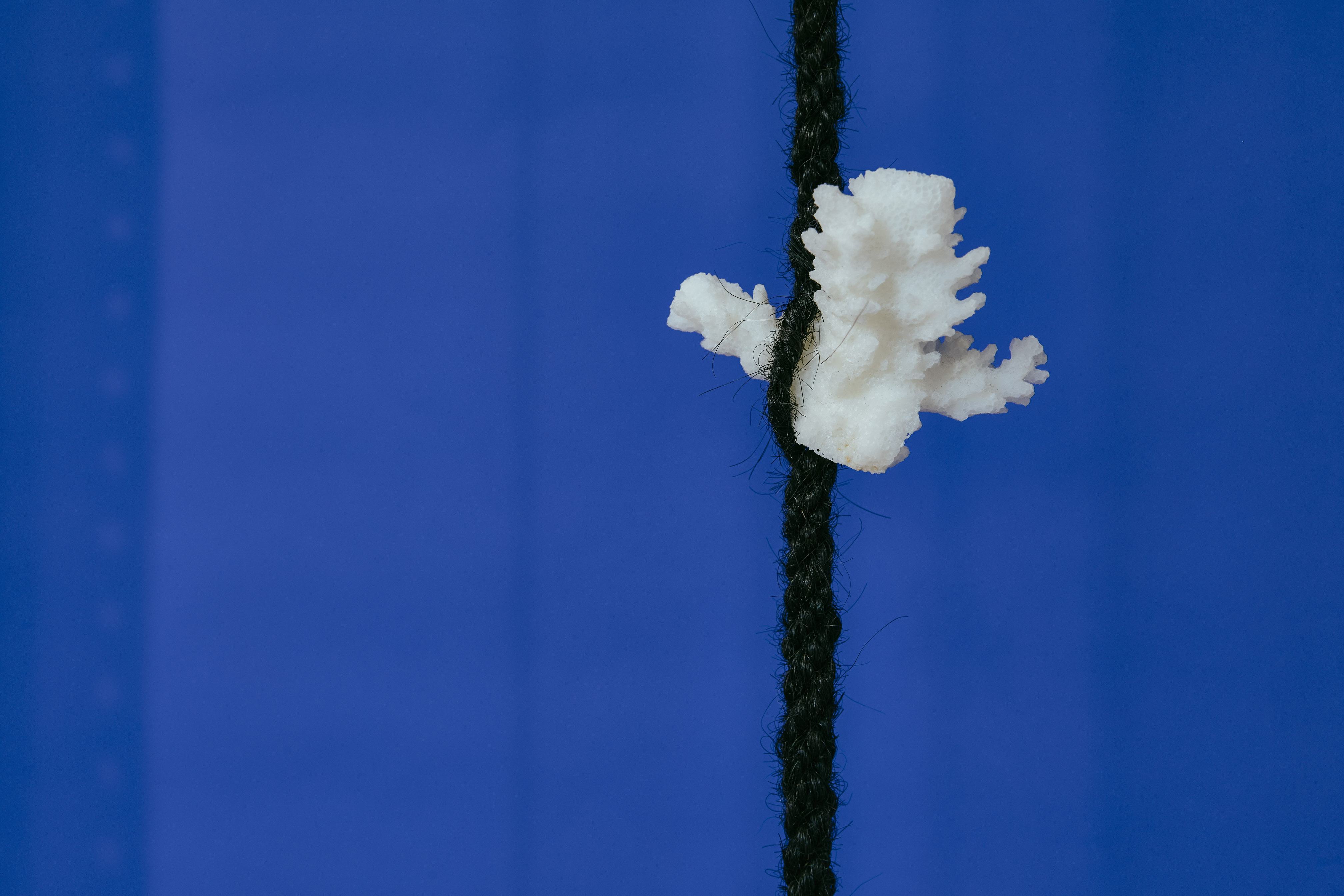
Applications Underwater
In collaboration with Bio Crafted and Studio Sanne Visser, alternatives to synthetic ropes are being tested in the rebuilding of Coral Reefs. While vegetal fibres have been found to decay rapidly, protein-based fibres, including human hair have shown promising results as an alternative to plastic. Far from being a new invention, In Oceania, Polynesians traditionally made cordage from human hair for a wide variety of marine applications. This project seeks to understand if this practice could be revived, reducing the plastic pollution in the lagoons caused by the synthetic ropes used in marine industries for applications such as coral farming.
Coral Gardeners, founded by a small group of young people in French Polynesia, has grown into a global organisation and is on a mission to save the world’s coral reefs through restoration projects paired with science, innovation and community engagement. Their teams are collecting fragments of heat-resilient corals to grow in nurseries on long lengths of rope. When the corals are large enough to have a better chance of survival, they are outplanted onto areas of damaged reef to help revive the ecosystem.
Chris Bellamy, founder of Bio Crafted, is a bio-designer and engineer exploring how we can live more symbiotically through interspecies and intercultural collaboration. His long-term research project with communities in French Polynesia uses design as a bridge between scientific and traditional knowledge, finding ways for them to come together to solve local and global problems.
www.biocrafted.com
@bio.crafted
@coralgardeners
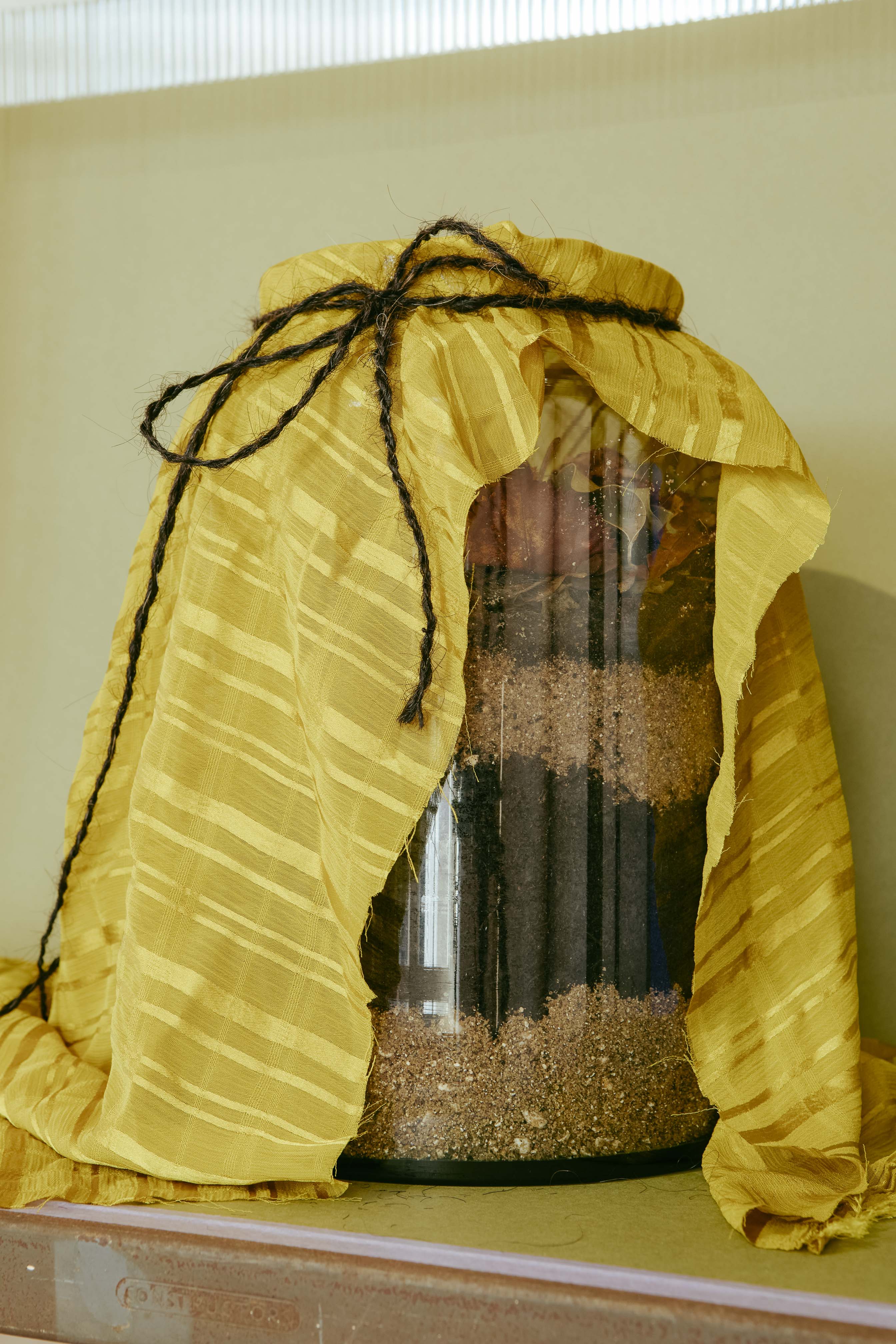
Applications In Green Spaces
As part of HairCycle, R-Urban Poplar is researching how short hair waste can be used to boost biodiversity and growth in green spaces while reducing water and energy use. Initial experiments have focused on using hair as a filter in greywater systems, felted hair mats as mulch and fertiliser, and hair mats in wormeries.
These trials are being carried out at R-Urban Poplar and at Carpenters Community Garden in Stratford, where local residents collaborate to explore sustainable practices like recycling, growing, and reusing. Future plans include testing hair in cob mixtures to build an outdoor kitchen oven and promoting innovative ways to enhance urban environments with bio-regional materials.
R-Urban Poplar is an eco-civic hub located on the Teviot Estate in Poplar, London, focused on fostering civic resilience in response to climate change. The project centres around two key initiatives: developing a just, circular food system and promoting resource reuse and repair. With prototype infrastructures such as composting and anaerobic digestion facilities, as well as workshops for repair and skill-sharing, R-Urban Poplar aims to create sustainable, localised urban systems. R-Urban Poplar is a public works project. R-Urban originally launched by Atelier d'architecture autogérée (Paris) and public works (London) and exists as an expanded European network, with multiple hubs from London, Paris, and Romania.
www.r-urban-poplar.net
@rurban_poplar_london
@publicworks_uk
Applications In Architecture
As part of HairCycle, Urban Radicals is collaborating with Sanne Visser to explore innovative architectural applications for hair waste. Through public engagement workshops, the studio aims to integrate hair waste into the construction of shared spaces in the London Borough of Newham, using tiles, bricks, and renders in which hair acts as the reinforcer or binder of the building materials.
Through co-designed and self-built initiatives, the studio proposes functional and cheerful gathering spaces for local residents. Once delivered these ideas can be further developed into blueprints for other communities, as part of socially and environmentally sustainable urban strategies that foster a sense of ownership and belonging.
Urban Radicals was founded by architects Era Savvides and Nasios Varnavas and is now an expansive network of friends, colleagues and expert collaborators who design objects, interiors, buildings and landscapes. Driven by a desire to build joyful public spaces, the practice works through a distinct and multi-disciplinary network of different players, all experts in their fields, forming a larger ‘we’, a system, to solve problems across contexts and scales.
www.urbanradicals.com
@urbanradicals
Partners